
Short answer: For 4 mm banana plug test leads in the UK, connector diameter is only the first check. The Leadbrand listing documents a 4 mm banana socket format and a GS1023 configuration, but it does not state plug shrouding, socket depth, voltage, current or measurement-category ratings. Compare the physical connector with your meter manual, then verify that the complete lead and accessory assembly is rated for the intended circuit. A plug that fits is not evidence that the lead is suitable for mains, distribution-board, automotive or electronics work.
Separate connector fit from electrical suitability
The live page supports one connection fact: a 4 mm banana socket format. It does not say whether the plugs are shrouded, how deeply they seat or which named multimeters accept them. Inspect your current leads and the instrument manual before assuming compatibility.
Electrical suitability is a separate decision. HSE guidance says probes and leads should be suitable for the conditions and comply with relevant requirements. A mechanically compatible connector cannot supply a missing voltage or measurement-category rating.
| Check | Documented answer | Buyer action |
|---|---|---|
| Connector format | 4 mm banana socket | Compare full plug and meter socket shape |
| Configuration | GS1023 | Confirm what that configuration contains |
| Electrical ratings | Not specified | Do not use where a verified rating is required |
| Named meter fitment | Not specified | Check the instrument manual |
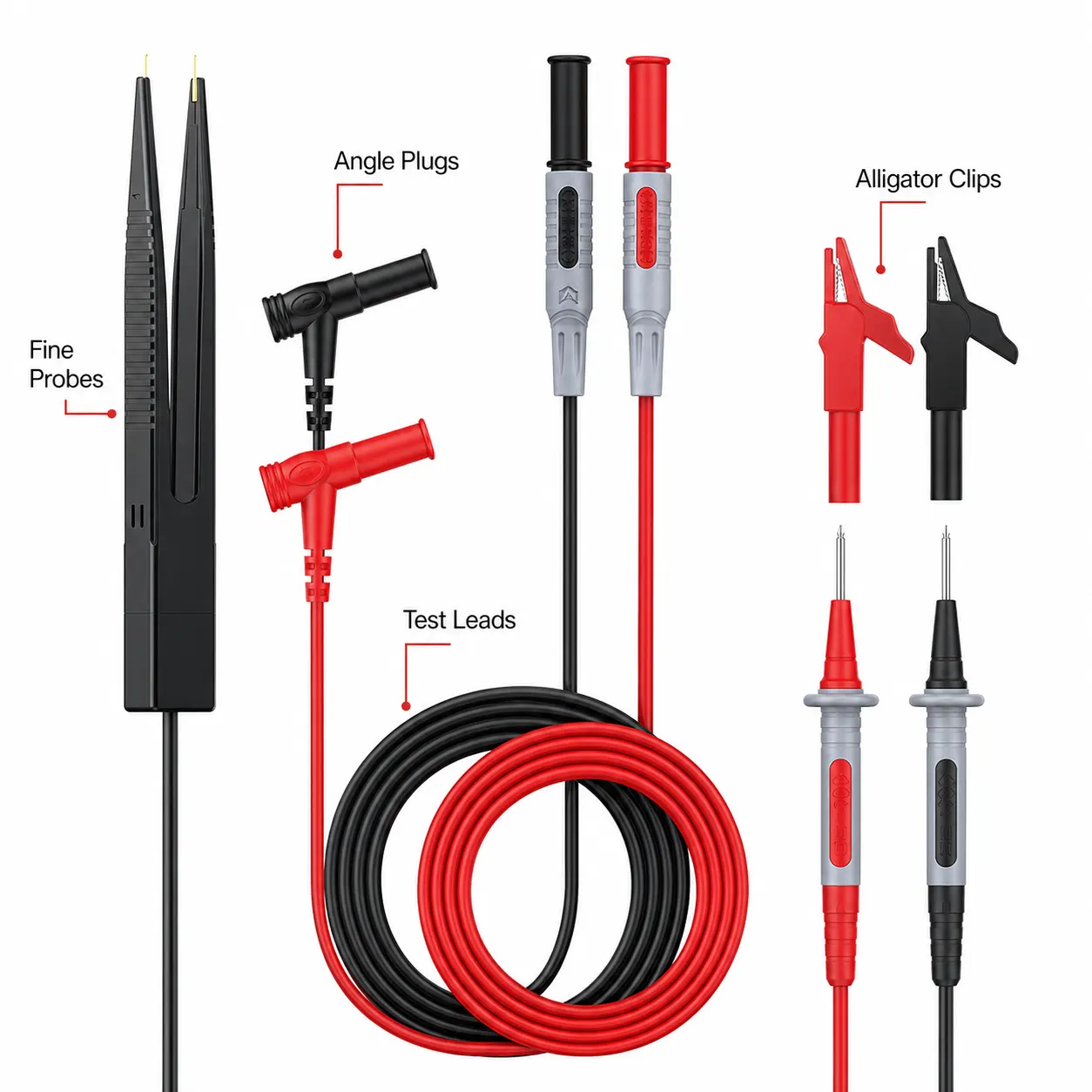
Build a purchase check around the intended circuit
Write down whether the leads are for de-energised continuity, low-voltage electronics, vehicle work or an installation tester. Each use can require different insulation, exposed-tip control, connector protection and ratings.
Do not transfer the rating printed on a meter to an unmarked accessory. The complete measuring arrangement is limited by the least suitable component.
- Identify the exact instrument and intended measurement.
- Read the instrument manufacturer's approved-accessory guidance.
- Compare the complete plug shape, shroud and socket depth.
- Find the voltage, current and measurement-category markings on the leads.
- Reject the purchase if an essential marking or compatibility detail remains unknown.
Understand the listed materials narrowly
The seller records copper, stainless steel, nickel plating and PVC. Those material names do not establish conductor size, insulation thickness, flexibility, temperature rating or resistance to oils and chemicals.
Use the materials as identification information only. Condition, construction and marked ratings matter more than a general material list when choosing test accessories.
Limits before ordering
The manufacturer does not specify lead length, plug shrouding, probe geometry, current, voltage, measurement category, fuse protection, conformity standard or named-meter compatibility on the current page.
Choose this GS1023 listing only when the seller or supplied documentation resolves every requirement for your instrument and task. Otherwise select a lead set with explicit ratings and fitment.
Related guides and product details
Use the 4 mm description to start the comparison, then require complete connector and safety documentation before ordering. Read 4 mm Multimeter Test Lead Kit: UK Buying Checklist for related guidance. Read Crocodile Clip Leads for Continuity Testing Safely for related guidance. Review the documented specification on the Multimeter test lead kit product page before ordering.
Sources and safety context
- Supports the GS1023, material and 4 mm connection facts and the stated specification gaps. Current Leadbrand product page.
- Supports selecting suitable probes and leads and controlling exposed conductive parts. HSE GS38: Electrical test equipment for use on low voltage electrical systems.